


NTE: Neverness to Everness
N2E
I spent time with NTE: Neverness to Everness, a role-playing game from N2E built around the idea of hunting anomalies while moving through a city. That premise immediately gives it a different mood from a traditional fantasy RPG: the setting feels urban, restless, and more interested in unusual encounters than in simply sending me from one medieval village to the next.
It is free to download, carries a Teen age rating, and has attracted over five million installs. The game currently sits at a 4.6 average from around ninety-five thousand ratings, which suggests that its central concept has connected with a large audience. I can understand why. Even before considering its long-term systems, the combination of city exploration and anomaly hunting gives each session a clear sense of purpose.
My overall reaction is positive, but not uncritical. This is the kind of game I would recommend to someone who wants a role-playing experience with a modern setting and room to wander. I would be more cautious with anyone who dislikes free-to-play pressure, wants a compact offline adventure, or expects every important detail about spending and progression to be obvious from the first session.
What the city-focused role-playing loop feels like
The strongest part of the experience is the way the city changes the usual rhythm of a role-playing game. Instead of treating the world as a collection of isolated menus and battle stages, NTE: Neverness to Everness presents the urban environment as the place where the activity happens. Hunting anomalies gives exploration a practical reason, while roaming gives the game a sense of movement between objectives.
I found that combination more engaging than a simple sequence of missions. When a game asks me to explore a city, I want the surroundings to feel relevant rather than decorative. Here, the premise encourages me to pay attention to where I am and why I am moving through the environment. That makes short play sessions feel more purposeful: I can enter the game with the intention of checking an area, following an anomaly-related task, or simply spending a little time seeing what the city offers.
Related News

Why WhatsApp Messenger Still Makes Everyday Communication Feel Easy

Jurassic World: The Game Is the Better Dino Tycoon for Strategic Players

Threads in Real Life: Who Should Join, Lurk, or Leave

How SHEIN Turned Shopping Into an Endless Content Feed

How to Make Fortnite Feel Smarter on Mobile

Should You Switch to Microsoft Outlook on Mobile?
The phrase “own every moment” is easy for a store description to claim, but the useful question is whether the game gives me meaningful reasons to stay involved. In my experience, the anomaly-hunting concept does that better than a generic quest marker would. It creates curiosity. I am not only asking what reward comes next; I am also wondering what kind of strange event might interrupt the ordinary city routine.
That said, players should not mistake atmosphere for a completely relaxed experience. Role-playing games built around ongoing exploration often ask for attention, repetition, and patience. NTE: Neverness to Everness is a better match for someone who enjoys returning to a world and gradually learning its rhythm than for someone who wants a short, self-contained story with a clearly defined ending.
Why the setting matters more than the label
Calling it a role-playing game explains only part of its appeal. The urban setting is the feature that gives the game its identity. A fantasy RPG can rely on familiar expectations—dungeons, castles, guilds, and wilderness routes. A city-based anomaly game has to make ordinary spaces feel worth investigating, and that creates a more unusual kind of tension.
Gallery
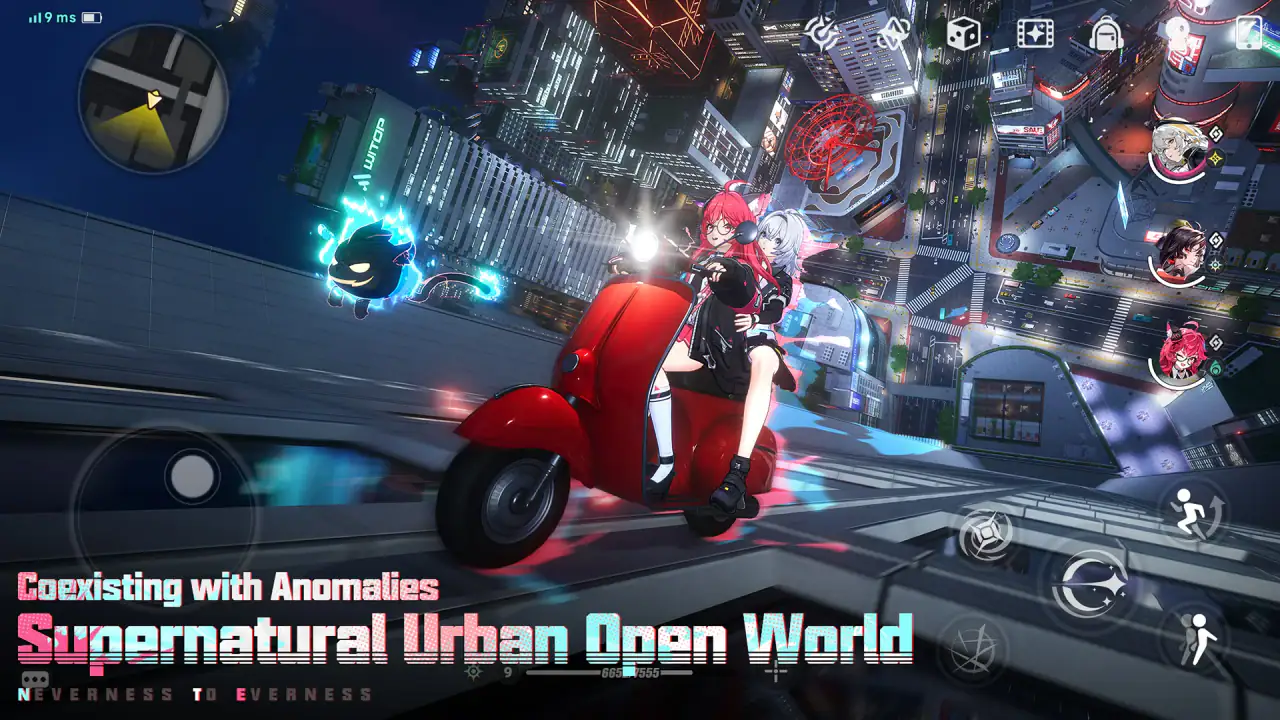
I liked the contrast between recognizable city life and the idea that something abnormal might be waiting inside it. That contrast helps the game avoid feeling like a standard fantasy adventure with different artwork. It also changes how I think about progress. Moving through the world is not merely travel between combat encounters; it is part of the fantasy of being someone who notices what does not belong.
This makes the game especially appealing for players who enjoy discovery and environmental context. If your favorite part of an RPG is reading every piece of background text, looking around before moving on, or finding a reason to revisit a familiar place, the setting has real potential. If you mainly want fast battles and immediate rewards, the city exploration may feel like an interruption rather than a strength.
How I would fit it into an everyday routine
A realistic use case is a short evening session after work or school. I could open the game with one simple goal: investigate an anomaly, make progress toward a current objective, and stop before the session becomes another long commitment. The city structure makes that kind of focused visit feel natural, because I do not need to approach every session as a major campaign event.
On a quieter weekend, I would play differently. I would spend more time roaming, testing routes, and seeing whether the environment rewards curiosity. That flexibility is one of the game’s practical strengths. It can serve both the player who wants a quick check-in and the player who is willing to settle into a longer exploration session.
My advice is to begin with a personal routine rather than chasing every available activity immediately. Decide whether you are playing for story, exploration, combat, or collection, then use that priority to control your time. Free-to-play role-playing games can easily turn a relaxing hobby into a list of obligations. Keeping a clear reason for each session helps prevent that.
Spending, progression, and the pressure to keep up
The game is free, but it includes in-app purchases ranging from $0.99 to $99.99 per item. That is the most important financial context for a potential player. The range covers both small optional purchases and very expensive individual items, so I would approach the store carefully rather than treating the game as cost-free simply because the initial download does not require payment.
I did not find it useful to judge the game by the existence of purchases alone. The more relevant question is how comfortable you are playing alongside them. A player who can ignore limited-time temptations and accept a slower path may have a very different experience from someone who feels compelled to buy whenever progress slows down.
The best way to protect the value of a free-to-play game is to set a spending boundary before the game gives you a reason to break it. That could mean deciding that you will spend nothing, allowing only occasional small purchases, or treating the game as entertainment with a fixed monthly limit. The exact boundary is personal, but making it in advance is much easier than making it after an urgent offer appears.
Progression pressure can also come from comparison. Once a role-playing game has a large player base, it is tempting to measure your account against people who play longer or spend more. NTE: Neverness to Everness is more enjoyable when I treat other players’ progress as background rather than as a deadline. The city and anomaly premise are strongest when I am exploring at my own pace.
Players who dislike any possibility of purchase pressure should think carefully before installing. A paid game with a fixed price is usually easier to budget and often easier to understand as a complete product. This game is a better choice for someone who values a free entry point and is comfortable deciding for themselves how much optional spending belongs in the experience.
What the purchase range tells me—and what it does not
The listed purchase range tells me that the game has a broad monetization structure, but it does not by itself prove that spending is required to enjoy the main experience. I would not claim that it is either perfectly generous or aggressively restrictive without a stable, detailed understanding of every progression path. A responsible review should separate what is visible from what is assumed.
For a new player, the practical response is simple: do not buy immediately. Spend enough time learning the basic loop to decide whether you genuinely enjoy hunting anomalies and roaming the city. If the core activity does not hold your attention without purchases, buying more content or currency is unlikely to solve the underlying problem.
I would also avoid spending to correct impatience. If a reward takes time, ask whether the delay is actually ruining your experience or merely encouraging you to hurry. That distinction matters. A purchase can be reasonable when it supports a game you already enjoy, but it is poor value when it is only being used to skip a frustration you have not yet understood.
Fairness for players who spend nothing
Fairness is difficult to evaluate from a rating or install count. A popular game can still be uncomfortable for non-spenders, while a game with purchases can remain enjoyable for people who never open the store. My own standard is whether the game lets a patient player make meaningful progress without feeling that every activity is designed to advertise a shortcut.
NTE: Neverness to Everness has an advantage here because its appeal is not limited to chasing a number. The city setting, the act of looking for anomalies, and the feeling of returning to a living urban space can provide value even when I am not trying to maximize progress. That makes it easier to imagine a satisfying low-spend approach than it would be in a game whose entire identity depends on competing for the strongest possible build.
Still, players who care about competitive equality should be cautious about drawing conclusions too quickly. The presence of purchases up to $99.99 per item means that spending is not a minor footnote. If your enjoyment depends on knowing that every player has exactly the same practical opportunities, a free-to-play RPG with a wide purchase range may never feel fully comfortable.
My recommendation is to define your own version of fairness. For a casual player, fairness may mean being able to explore and enjoy the story without paying. For a completionist, it may mean obtaining everything through play. For a competitive player, it may mean equal access to power. Those are different standards, and the game will not necessarily satisfy all of them equally.
A useful test during the first sessions
During the opening sessions, I would watch my own behavior rather than only watching the reward screen. Do I want to explore because the city is interesting, or am I moving only because the game is withholding the next upgrade? Do I feel invited to investigate anomalies, or merely pushed toward a purchase? Those reactions are more valuable than a general promise that the game is fair.
Another useful test is to pause before buying anything and return later. If the desire disappears, it was probably impulse rather than genuine value. If the purchase still seems worthwhile after playing normally, you can make the decision with a clearer head. This approach is particularly important when a game offers both very small purchases and items priced at the top of its range.
For families, the Teen rating is a reminder that this is not aimed at young children. I would still use device-level purchase controls and discuss spending expectations with younger players. The rating describes the intended age audience, while spending discipline remains a separate household decision.
Questions I would ask before downloading
One obvious question is whether the game is suitable for someone who only has a few minutes at a time. I think it can be, provided you accept that some role-playing progress may be more satisfying when you have enough time to explore properly. Short sessions work best when you choose one target instead of trying to clear everything available.
Another question is whether it replaces a traditional fantasy RPG. For me, it does not. It offers a different fantasy: urban investigation, unusual events, and movement through a city rather than a conventional world of castles and wilderness. If you want swords, dungeons, and a tightly guided heroic journey, another role-playing game may suit you better. If you want a modern setting with a stranger edge, this is more distinctive.
People also often want to know whether a free game can be enjoyed without spending. My honest answer is that the purchase range means you should enter with realistic expectations, but the premise gives non-spenders something to enjoy beyond the store. I would try it free first, learn the loop, and only then decide whether optional purchases add enough value for my own habits.
Some readers will wonder whether the large player base makes the game intimidating. Around ninety-five thousand ratings and more than five million installs indicate that many people have already tried it, but those figures do not mean a newcomer must rush. I would treat the community size as evidence that the game has broad visibility, not as a reason to measure my progress against everyone else.
Finally, the current version is 1.1.1.75715, and the game requires Android 10 or later. That makes checking your device compatibility worthwhile before planning a download. On supported hardware, I would also leave enough storage and battery headroom for an urban exploration game, especially if you intend to play longer sessions rather than brief visits.
Who should play it, and who should skip it
I would recommend NTE: Neverness to Everness to players who enjoy role-playing games with a strong sense of place. It is particularly appealing if you like the idea of investigating strange events inside a city rather than following a familiar fantasy template. Players who enjoy gradual discovery, revisiting locations, and building a personal routine around a free game should give it a serious look.
It is also a good candidate for someone who wants to try before committing money. The free entry point removes the need to make a purchase decision immediately. You can test whether the city, anomaly hunting, and overall pace fit your taste before deciding how much time or money you want to invest.
I would skip it if you want a fully paid, self-contained experience with no purchase prompts or spending decisions. I would also look elsewhere if your priority is purely competitive balance, instant progression, or a traditional fantasy campaign. The game’s identity depends on its unusual urban premise, so players who find that premise uninteresting may not be won over by the role-playing label alone.
There is also a personality fit involved. I enjoy games that let me form my own short-term goals, but some players experience that freedom as a lack of direction. If you need every session to provide a sharply defined objective and a quick conclusion, the roaming aspect may feel less efficient than a linear alternative.
My trust verdict after weighing the trade-offs
NTE: Neverness to Everness stands out because it gives anomaly hunting a city-sized stage. That is more memorable to me than a generic promise of adventure, and it creates a useful reason to explore rather than simply travel between menus. N2E has chosen a setting that can appeal to players who want their role-playing game to feel contemporary, strange, and open to personal pacing.
The financial side deserves equal attention. It is free to play, but the in-app purchase range reaches from $0.99 to $99.99 per item, so I would not approach it casually if you are vulnerable to impulse spending. The fairest way to enjoy it is to decide your limits first, test the core loop without buying, and judge purchases by lasting value rather than urgency.
My final recommendation is therefore conditional but clear: try it if the idea of roaming a city to hunt anomalies genuinely interests you, and keep your spending rules visible while you play. Skip it if you want a fixed-price RPG or if any form of free-to-play pressure undermines your enjoyment. For the right player, the game’s setting gives it a personality that many role-playing alternatives lack.
After considering both the appeal and the uncertainty around long-term spending pressure, I would recommend giving it a careful trial rather than making an immediate commitment. The strongest reason to stay is the world itself and the curiosity it creates. If the city makes you want to investigate even when no reward is waiting, the game is probably earning your attention honestly.
FAQs for NTE: Neverness to Everness
What is the main objective of NTE: Neverness to Everness?
NTE: Neverness to Everness is a captivating exploration game that aims to take players on a philosophical journey through beautifully designed worlds. The main objective is to solve puzzles and uncover stories that reflect on existential themes, encouraging players to think deeply about life and existence.
Is NTE: Neverness to Everness suitable for all ages?
While NTE: Neverness to Everness is designed with a broad audience in mind, it is best suited for teenagers and adults who can appreciate its philosophical themes and complex puzzles. Parents might want to preview the game to ensure its content aligns with their family’s values and the maturity level of younger players.
What platforms is NTE: Neverness to Everness available on?
NTE: Neverness to Everness is available for download on both Android and iOS devices. It is optimized for smartphones and tablets, offering a seamless experience on a variety of screen sizes. Ensure your device meets the minimum system requirements for the best performance.
Does NTE: Neverness to Everness require an internet connection?
NTE: Neverness to Everness can be played offline, making it ideal for users who want to enjoy the game without needing a constant internet connection. However, some features, such as updates or downloading additional content, may require internet access.
Are there in-app purchases in NTE: Neverness to Everness?
Yes, NTE: Neverness to Everness includes optional in-app purchases that can enhance the gaming experience. These may include additional storylines, cosmetic upgrades, or hints to help solve challenging puzzles. Users should be aware of these options and can disable in-app purchases in their device settings if desired.
Pros
- Visually stunning graphics enhance gameplay.
- Engaging storyline with immersive lore.
- Intuitive controls for smooth navigation.
- Regular updates with new content.
- Multiplayer mode fosters community interaction.
Cons
- Requires a stable internet connection.
- In-app purchases can be costly.
- High battery consumption on mobile devices.
- Some features are locked behind paywalls.
- Occasional lag on older devices.


